Heavy Is the Head That Wears the Headset

There’s an old phrase people like to trot out when they talk about responsibility: heavy is the head that wears the crown.
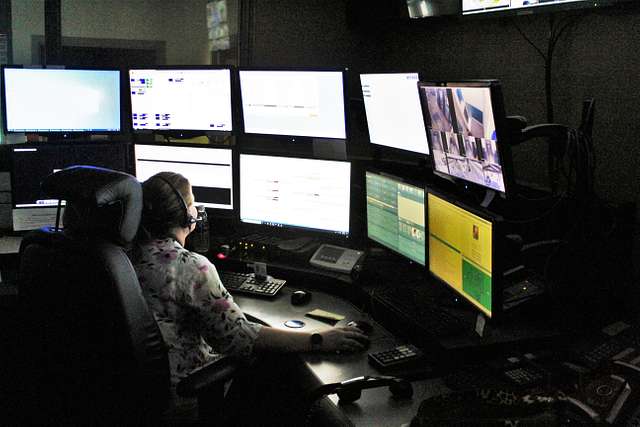
Dispatch doesn’t come with a crown. It comes with a headset, a chair that never quite adjusts right, and a bank of screens that never stop blinking. But the weight is real all the same.
911 dispatching isn’t for everyone. In truth, it’s probably not for most people. It’s one of those jobs somebody has to do—but until you’ve done it, or worked closely with those who have, it’s easy to forget it exists at all. People remember the sirens. They remember the lights. They remember the uniform standing in front of them when things go wrong.
They rarely remember the voice that answered first.
Dispatch is a job where answers are rare and questions multiply. You’re expected to bring order to chaos with incomplete information and a ticking clock. You don’t get the luxury of certainty. You work in probabilities, instincts, and fragments—half-heard addresses, panicked voices, radio traffic stepping on itself at exactly the wrong moment.
You learn quickly that clarity matters more than comfort.
You’ll hear some of the best humanity has to offer, and some of the worst. You’ll work alongside people who run toward danger for a living, and sometimes find yourself empathizing with those who’ve made a career out of causing it. When you’re the first point of contact, morality stops being theoretical. It becomes situational, messy, and deeply human.
You’ll hear life enter the world, and you’ll hear it leave. Cheers, whimpers, laughter, screams. Gunshots. Silence. You experience the full spectrum of living and dying from one side of a phone line or radio. There’s no camera angle to cut away, no background music to cue you when the moment matters. You just hear it happen and keep going.
Sometimes, you’ll be the last voice someone ever hears.
You’ll be the last calm presence they have—the last thing standing between them and complete panic. You’ll plead with them, bargain with them, promise help is coming. You’ll keep your voice steady even when you can feel it fraying. And sometimes, even when you’ve done everything right—followed policy, asked the right questions, said the right words—it won’t be enough.
That’s one of the hardest lessons dispatch teaches: doing your job well does not guarantee a good outcome.

There’s no rewind. No alternate timeline where you get to try a different phrasing and see if the result changes. The call ends, the radio quiets, and the next line lights up anyway.
Dispatch is a strange mix of absolute urgency and relentless routine. One moment you’re coordinating a major incident; the next you’re taking a call about a barking dog. You don’t get to choose the order. You don’t get time to reset between them. You compartmentalize and move on, because that’s what the job demands.
You’ll lose police officers, firefighters, EMTs—people who signed up for the same hard work you did. Each loss lands like a punch to the gut. These aren’t abstract tragedies; they’re names, voices, call signs you recognize. You meet incredible people and quietly learn not to get too close, not because you don’t care, but because caring has a cost.
Most of the time, you’ll be an afterthought.
The last included in briefings. The last mentioned in celebrations. A quiet footnote in after-action reviews. Dispatch exists in an odd liminal space: essential, but invisible. Everyone knows you’re there—right up until the moment they don’t think about you at all.
Once a year—one week out of fifty-two—you might get a meal, a trinket, a thank-you that feels a little rehearsed. And that’s fine. None of that is why you took the job.
You took it because somebody has to answer the phone. Somebody has to stay functional when everything is falling apart. Somebody has to make decisions with real consequences, using imperfect information, in real time.
That’s not heroism. It’s responsibility.
Dispatch changes the way you see the world. You become hyper-aware. You hear things in people’s voices others miss. You lose certain illusions—about safety, about fairness, about how often things actually work out the way they’re supposed to. You learn that procedure is a tool, not a shield, and that following the rules doesn’t absolve you of the weight of your decisions.
Some nights, you lie awake questioning yourself.
You know, rationally, that you did the best you could with what you had. Still, a small voice asks if you could have done more. Asked one more question. Chosen one different word. On those nights, sleep is optional, and self-doubt is loud.
And then the alarm goes off.
You get up.
You put on the headset.
You log in.
And you do it all again.